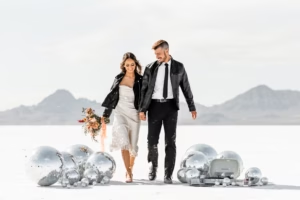

Starting a photography business in Utah can feel both thrilling and strangely simple—because it is. You bring the eye, the energy, and the people skills; the state brings friendly business tools, clear tax rules (yes, even for digital galleries), and a community that actually books. If you’ve wondered whether those quiet inquiries and Instagram DMs can become real income, you’re in the right place. Let me explain how to build a legit, profitable photography brand here—step by step, plain English, with links you can tap when you want receipts 1.
Who this is for (and why Utah makes it easier)
If you’re a mom with a camera, an entrepreneur eyeing a new revenue stream, a hobbyist finally getting paid, or a seasoned creative moving to the Beehive State—this guide is for you. Utah’s tools for small businesses are refreshingly straightforward, and you can register, get your tax accounts, and launch your site in a weekend. We’ll keep things conversational but precise so you can take confident action, not just notes 2 1.
We’ll walk through business setup, taxes, licenses, insurance, pricing, gear, and how to actually get booked in Utah—without pretending you’ve got unlimited time or money. Honestly, if you can manage school pickup and remember which kid has soccer, you can absolutely handle this.
First moves that matter: name, entity, account
Pick a name you can keep
Start with a short, searchable name: easy to spell, no confusing punctuation, and something that sounds like you. If you’ll use your personal name (“Jen Kunz Photography” style), you can still file a DBA if you want flexibility later.
Before you fall in love, run a business name search through Utah’s database. It will show exact and similar matches so you don’t accidentally copy a studio two cities over 3.
Choose a structure that fits your risk tolerance
Most new solo photographers start as sole proprietors. It’s simple and you report everything on your personal tax return. As your income grows—or once you’re shooting weddings, commercial work, or anything with higher liability—an LLC often makes more sense because it separates business risk from your personal assets.
The IRS lays out basic business structure types in plain language. It’s worth skimming that guide and, when you can, asking a Utah CPA how it fits your situation 4.
Register your business with Utah
Utah’s online system lets you create or register most entities from one portal. Create your UtahID login, follow the prompts, and keep your confirmation emails. They matter when you open bank accounts or apply for city licenses 1 5.
Get your EIN (even if you’re solo)
Even if you’re a one-person show, grab an EIN instead of using your SSN on W-9s, contracts, and lab accounts. It’s free and instant through the IRS, and you’ll use it for banking and future hiring 6.
Licenses, taxes, and that “do I charge for digital?” question
Open your Utah tax accounts
If you’re selling photos in Utah, you’ll need a Sales & Use Tax account. You’ll register through the Utah State Tax Commission’s system; if you ever bring on employees, you’ll also consider state withholding and unemployment accounts through the Department of Workforce Services 7 8.
It sounds dry, but once your account is set up, filing on a schedule becomes just another recurring task—like backing up RAW files, only less emotionally satisfying.
Are digital galleries taxable in Utah?
Short version: yes, in most cases. Utah treats the sale of photographs as taxable, whether you deliver prints, USB drives, or downloadable galleries. The Tax Commission has a self-review guide written specifically for photography businesses, plus PDFs with examples and FAQs that walk through different scenarios 9 10 11.
How do you know which tax rate to charge?
Utah uses destination-based sales tax. That usually means you charge the rate for the location where the client receives the product. Prints shipped to Lehi use Lehi’s rate; other scenarios can get nuanced. The state publishes current rates and the self-review instructions point back to those tools, so it’s smart to verify and then confirm details with your tax professional 12 13.
City business license (yes, even from home)
Most cities along the Wasatch Front expect you to have a business license—even if you’re only editing from home and shooting on location. Salt Lake City uses a home-occupation application; Provo has a specific home-based permit; some cities also reference zoning requirements in their code library 14 15 16.
Is it tempting to skip this step? Absolutely. But when a neighbor complains about cars lining the street for mini-sessions, that license suddenly becomes your best friend.
Hobby or business?
This is where many photographers hesitate. The IRS explains the difference pretty clearly: a business is something you run with the intent to make a profit, track like a business, and treat like one on your tax return 17 18.
If you’re advertising, taking regular clients, and reinvesting in gear, it’s usually time to embrace the “business owner” title. You don’t need to feel ready—you become ready by doing it.
Brand, website, and findability (so clients can actually book you)
Claim your Google Business Profile
This is one of the most powerful things you can do early on. Add your studio or home base, list your service areas, upload a handful of your best work, and enable messaging. That profile fuels those magical “photographer near me” results that bring in families, couples, and business clients 19.
Set up Search Console and GA4
Once your website is live, verify your domain in Google Search Console so you can see which searches are actually bringing people to you. Then install Google Analytics 4 so you can track contact form submissions, clicks to your email, and “Book Now” buttons—not just pageviews 20 21.
It sounds technical, but once it’s in place, you can make normal-human decisions like “That blog post actually led to two bookings, so I’ll write more like that.”
Local Utah visibility beyond Google
Don’t sleep on KSL. Utahns genuinely use it when they want an actual person rather than a big brand. Create a clean listing, define your service area (for example, Weber and Davis counties), and showcase a few standout images and price ranges 22 23.
Then, after you wrap a great session, ask for a review while the excitement is fresh. Those stars have real weight when people compare you to three other photographers in a search.
Money talk: simple pricing that pays you every time
Your pricing has to cover your time, gear, software, insurance, taxes, and still leave money that’s actually yours. Mild contradiction: people love saying “Charge what you’re worth,” but that only helps once you know your costs and your market.
A straightforward structure most Utah photographers start with is three main packages plus a few add-ons.
| Package | What’s Included | Starting Price |
|---|---|---|
| Essentials | 45–60 minutes, 1 location, 25 edited digitals, online gallery | $325–$525 |
| Signature | 90 minutes, 2 locations, 50 edited digitals, small print credit | $575–$875 |
| Heirloom | Up to 3 hours, multiple outfits, 80+ digitals, album add-on | $1,100–$1,800 |
Whatever numbers you land on, show your price and then clearly list sales tax on the invoice. That keeps you in line with state expectations, especially for digital files and print products 10.
Must-have documents (and what they should say)
Client contract
A good contract protects both you and your clients. It usually covers scope of work, payment schedule, rescheduling and cancellation, image delivery timelines, copyright license, model release options, and how sales tax is handled.
You don’t have to write this from scratch. Professional photographer associations share sample contracts you can adapt with local legal help when you’re ready 24.
Model and property releases
If you plan to use images in marketing, on your website, or in portfolio pieces, you’ll want signed releases—especially for recognizable people and private locations. Industry groups publish sample release forms that you can customize for your brand 25.
Copyright: already yours, but registration strengthens it
Here’s the thing: you own the copyright the moment you press the shutter. But when you’re shooting commercial campaigns, high-end portraits, or anything at risk of unauthorized use, registering groups of images can give you extra legal options if there’s ever a dispute 26.
You don’t need every policy under the sun on day one, but a couple of coverages are worth looking at right from the start. The Small Business Administration has a plain-language overview that helps you understand what each policy type does and why it matters 27.
- General liability can help with bodily injury or property damage claims that happen while you’re working—think someone tripping over a light stand.
- Professional liability (E&O) relates more to mistakes or missed deliverables that affect a client’s event or campaign.
- Equipment coverage (often called an inland marine policy) protects your cameras and lenses when they’re out of the house, in the car, or on location 28.
Insurance organizations also explain these policies in more detail, including how inland marine coverage works for mobile gear-based businesses like photography 29 30.
Compliance quick hits most new photographers miss
Drones for paid work? If you plan to charge for drone photos or video—real estate, land, venues—you’ll need to follow FAA rules for commercial drone operations, including getting a Remote Pilot Certificate under Part 107 31. Utah also has specific provisions about unmanned aircraft in its transportation code, so it’s worth a quick look before flying over certain properties 32.
Reviews and testimonials? When you feature client quotes on your website or social media, keep them honest and clear. If someone got a discount or special perk for their review, the Federal Trade Commission expects that to be disclosed so potential clients aren’t misled 33.
Privacy and tracking? If your site uses analytics or ads, a basic privacy notice is a good idea. Utah’s privacy law focuses on larger data handlers, but being transparent about cookies, contact forms, and email lists helps build trust with your clients 34.
Gear that actually moves the needle (and what can wait)
You can absolutely start with a single reliable camera, a fast normal zoom or prime, and good light. Utah’s bright sun, strong snow reflection, and sometimes harsh shadows mean you’ll get more mileage from learning to handle contrast than from chasing every new lens.
For example, a body like the Nikon Z6III (what i use) gives you fast autofocus for kids and couples, solid low-light performance for winter receptions, and files that play nicely with Lightroom. Pair that with a 24–70mm and a fast 85mm, and you can cover almost everything from families to intimate weddings.
What matters even more is having enough batteries, memory cards, and a solid backup system so you never have to tell a client their images are gone. That conversation is harder than any test or registration form you’ll ever fill out.
Client experience (the quiet differentiator)
From inquiry to delivery
Great client experience doesn’t mean being fancy; it means being clear. Respond to inquiries within about a business half-day. Send a warm, simple email that includes your Utah photography pricing, a couple of date options, and one link to book or schedule a call.
Once they’re booked, send a prep guide and a short style board. On session day, keep the energy calm but confident—especially with families. Call out wins as you go: “We’ve got the Christmas card shot; now let’s play.” After the session, remind them about the gallery delivery timeline, and when you deliver, include both web-sized and print-sized files plus a one-page guide that explains printing and any sales tax on additional products 10.
Prints vs. digitals: you don’t have to choose
Many Utah families want both: digitals for sharing and prints for walls. Build packages that include a curated selection of digitals plus optional albums, canvases, or framed prints. Show real samples—they do more than a hundred words of explanation ever could.
Marketing that actually works here
- Google Business Profile: Keep adding recents shoots as photos and use the post feature once a week with short updates or mini-session promos 19.
- KSL Services: This is where a lot of locals look when they want someone nearby. Add detailed service areas and a brief, friendly description that sounds like you 22 23.
- Instagram & Facebook: Instead of posting random photos, think in mini-series: “Fall Locations in Davis County,” “Indoor Winter Session Ideas,” “What to Wear for Snowy Photos.” Save them to Highlights or Guides so new followers see your best content first.
- Vendor relationships: When you photograph a wedding or event, send finished galleries to planners, florists, and makeup artists with clear, kind usage guidelines tied back to your contract resources 24.
SEO quick wins for photographers in Utah
Search engine optimization sounds big and technical, but you can start small and smart. Write one helpful resource a month: “Best Fall Family Photo Locations in Utah County,” “What to Wear for Snowy Family Photos in Weber County,” or “How to Plan a Sunrise Session in Salt Lake City.”
Include simple location-based phrases like family photographer in Utah in your headings and copy, add your own images, and link each post to your contact page and booking buttons. Then, watch performance in Search Console and GA4; keep creating more of what actually leads to inquiries 20 21.
Your 30-day launch plan (Utah edition)
- Days 1–3: Decide on a name, check availability, register the business, and apply for your EIN 3 1 6.
- Days 4–6: Open a separate business bank account, set up Utah Sales & Use Tax, and claim your Google Business Profile 7 19.
- Days 7–10: Build a clean services page with three packages and a simple contact form.
- Days 11–14: Install GA4, verify Search Console, and publish your first location-specific blog post 20 21.
- Days 15–17: Draft contracts and releases; review resources from photographer associations to refine your documents 24 25.
- Days 18–20: Look into liability and equipment insurance. Get basic coverage in place so you can shoot confidently 27 28.
- Days 21–24: Launch a KSL Services listing and encourage your first happy clients to leave honest reviews 22 23.
- Days 25–27: If you plan to offer drone work, start prepping for the FAA Part 107 exam; if you’re home-based, submit your city’s home-occupation or home-based business forms 31 14 15.
- Days 28–30: Publish a “What to Wear” guide, email friends and local vendors, and book a handful of paid “portfolio-building” sessions at real, sustainable pricing.
A quick Utah-specific FAQ (you’ll ask these—everyone does)
- Do I charge sales tax on mini-sessions and digitals? In many cases, yes. Utah’s photography self-review and example documents explain how tax applies to prints, products, and electronically delivered images 9 10 11.
- Do I need a city license if I only shoot on-location? Often yes. Many cities require a license for any business based within city limits, whether clients come to you or not. Check your city’s licensing information to be sure 14 15.
- Can I use client images in my ads? With permission through your contract and model release. Keep a “no-share” option and honor it; clients appreciate the control over their images 25.
- What about testimonials on my site? Follow simple truth-in-endorsement rules and disclose special incentives for reviews so potential clients understand the context 33.
Ready when you are
You know what? Utah is a surprisingly friendly place to build a photography business that feels personal and still runs like a real company. Choose a structure, get your licenses and tax accounts set, keep your contracts and insurance tidy, and then put most of your energy into serving people well.
If you’re feeling that mix of excitement and nerves—that’s normal. It just means you care.
I wish you all the best! Remember, you got this!
-Jen
Photography Questions? Contact Me Here!
Sources
- Utah Business Registration Portal
- Utah Division of Corporations
- Utah Business Entity & Name Availability Searches
- IRS: Business Structures Overview
- Utah Business Renewal Process
- IRS: Apply for an EIN Online
- Utah State Tax Commission: Business Registration
- Utah DWS: Employer Unemployment Insurance
- Utah Sales & Use Self-Review: Photographers
- Utah Tax: Photography Examples
- Utah Tax: Photography FAQ
- Utah Sales & Use Tax Rates
- Utah Tax: Photography Self-Review Instructions
- Salt Lake City Business Licensing
- Provo Home-Based Business Permit
- Salt Lake City Code: Home Occupation
- IRS: Hobby vs. Business
- IRS Publication 334: Tax Guide for Small Business
- Google Business Profile
- Google Search Console Overview
- GA4 Getting Started
- KSL Services
- KSL: Create a Service Listing
- PPA: Contract Resources
- ASMP: Model & Property Releases
- U.S. Copyright Office Registration
- SBA: Business Insurance Guide
- Insureon: Inland Marine for Photographers
- Insurance Information Institute: Small Business Insurance
- Insurance Information Institute: Inland Marine
- FAA: Become a Drone Pilot (Part 107)
- Utah Code §72-10-109 (UAS)
- FTC: Endorsement Guides
- Utah Consumer Privacy Act (UCPA)